




Mushrooms grow on compost. The compost is prepared by specialised companies. From the moment the raw materials are mixed until the compost is delivered to the production farms, the process takes four to six weeks. The exact duration depends on the raw materials and the composting company’s system.
Once the compost has been placed at the production farm, it takes about 16 to 20 days before mushroom harvesting can begin. Harvesting continues for two to three weeks. After that, it is no longer profitable to continue harvesting.


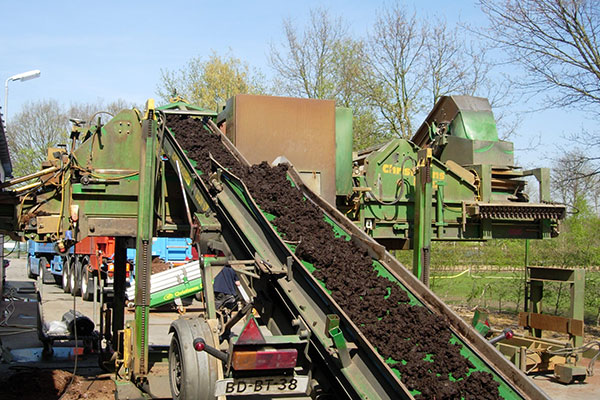
1. Filling the cell
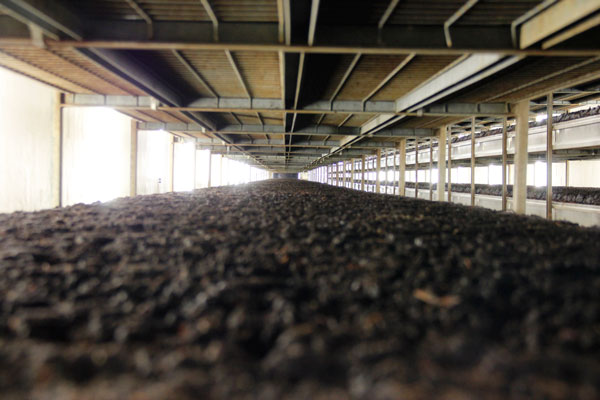
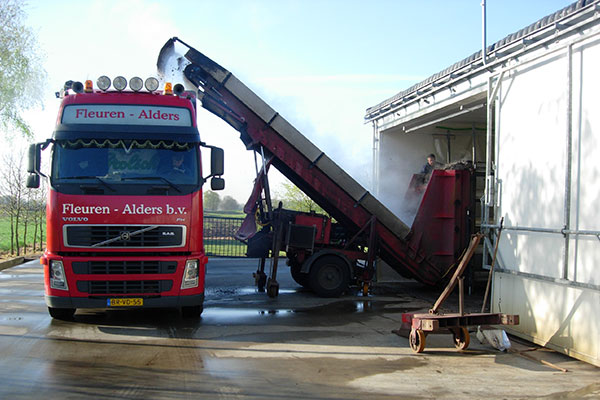
After 14-18 days, the compost is transported to the farm. At the farm, the cultivation cell is filled with compost using a special filling machine. A cultivation cell is a climate-controlled space with shelving units. During filling, a 20 cm layer of compost is placed with a 5 cm layer of casing soil on top. This layer is pulled into the shelf of the cultivation cell. Casing soil consists of a mixture of peat, mixed by specialised companies. At farms who do their own phase III, the compost remains in the cell, but after 14-18 days a layer of casing is placed on the compost.
A cultivation cell is a climate-controlled room with shelves.
2. Mycelium growth in the casing soil
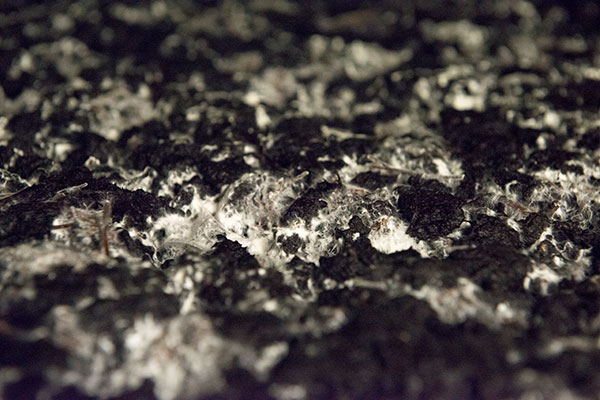
After filling the cell, the mycelium grows from the compost into the casing soil. This process takes 4-7 days. During mycelium growth in the casing soil, water is added to the casing soil. By adding water during the mycelium growth, the mycelium cannot grow to the surface of the casing soil.
3. Recovery Growth
After the mycelium growth in the casing soil, the recovery growth phase begins. This phase lasts 1 to 2 days. During the recovery growth phase, no water is given, and a humid, warm climate is created (similar to summer). This climate causes the mycelium to grow to the surface of the casing soil.
4. Ventilation & Bud Formation
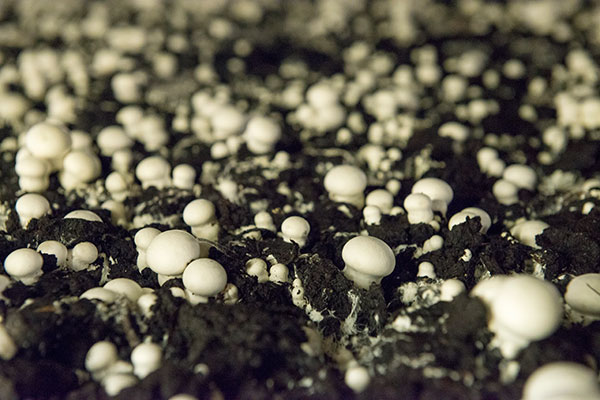
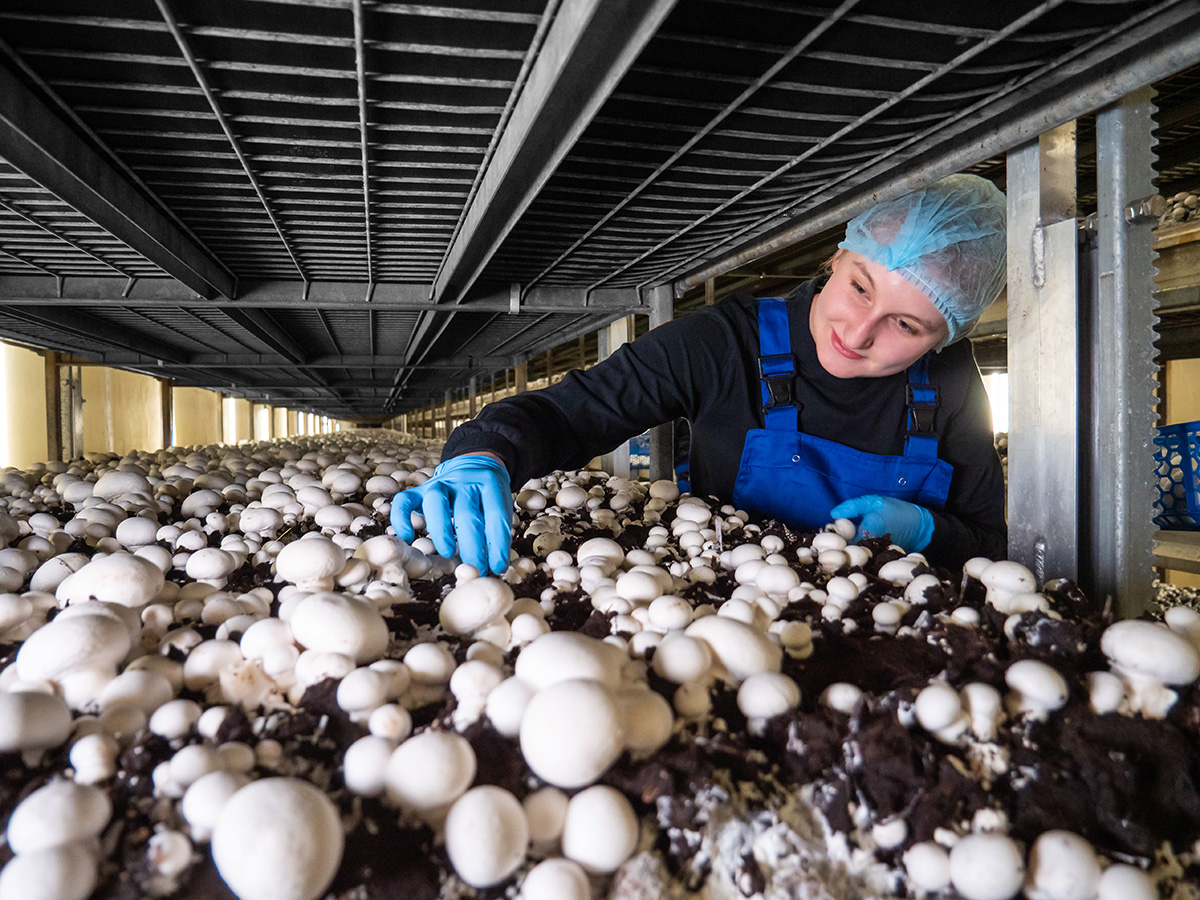
Once the mycelium has grown to the surface, the grower begins to ventilate. Ventilation mimics the autumn season. Colder air and lower CO2 cause the fluffy mycelium to contract. Once the mycelium has contracted, it forms buds approximately 5-6 days after ventilation. These buds (the size of pinheads) are the primordia of the mushroom. This period is called bud formation. After that, the Relative Humidity (RH) in the cell is slowly reduced so that the buds begin to grow into mushrooms. It takes 5 to 7 days from bud to harvestable mushrooms.
5. Harvesting Phase
Mushroom harvesting takes place in “flights.”
- The first flight is picked in 4 to 5 days and yields 16 to 20 kg/m2.
- The second flight comes after about 5-7 days and yields a slightly lower volume, 9-11 kg/m2.
Total production is between 26 and 32 kg/m2.
During harvesting, the mushrooms are sorted into the correct packaging and weighed. This is done to minimize handling, which can damage the mushrooms.
Total yield is between 26 and 32 kg/m2.
6. Emptying the cultivation cell
At the end of cultivation cycle, the cultivation area and the finished compost are heated as a whole. This is done using steam, in order to kill all diseases and pests. After steam sterilization, the compost is removed from the cell, which is then cleaned and ready to start a new cultivation cycle.
7. Quick-cooling Mushrooms
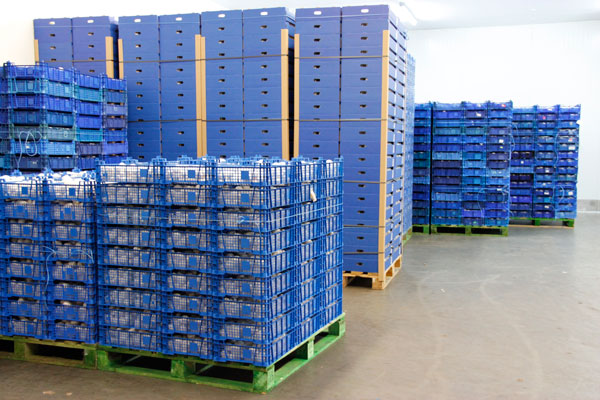
After harvesting, the mushrooms are taken to the blast chiller to cool them from +/-13 degrees to +/-3 degrees within 45 minutes. This improves the quality of the mushrooms, which can then be packaged immediately. If mushrooms are packaged while still warm, condensation can form on the underside of the lid or foil.
8. Packaging
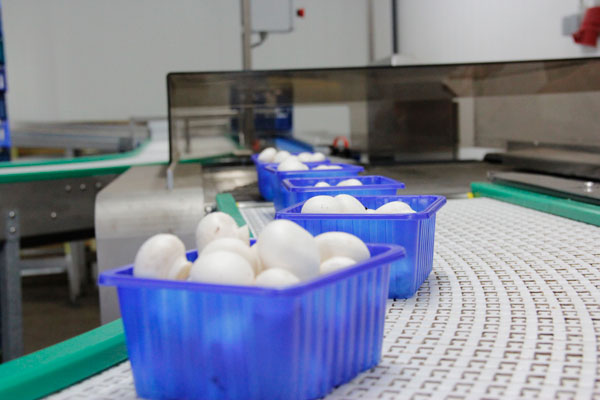
During packaging, the trays are placed on the infeed belt of the packaging line. The tray is then checked for weight by a checkweigher. If the weight is correct, the tray is fed through to the packaging machine. During this transfer, the tray undergoes a visual inspection, after which it is fitted with a lid, (top) seal or foil with a label containing all the necessary information.
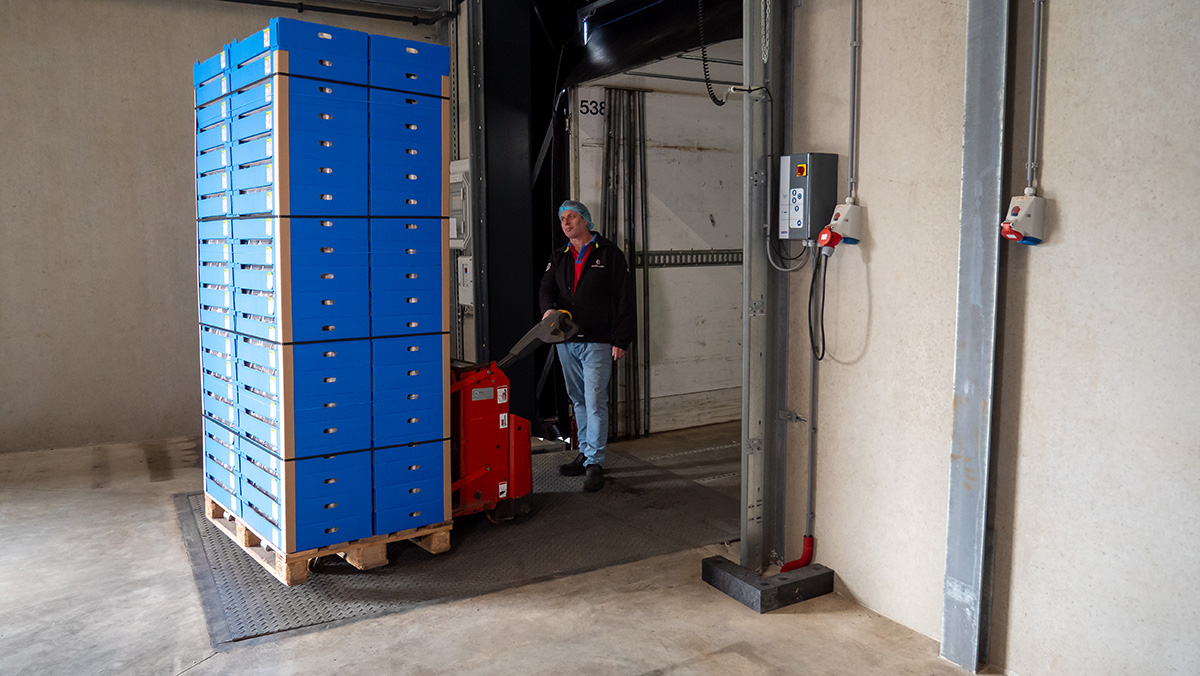
9. Transport
The packaged mushrooms are ready in the cold store te be transported to distribution centers, transshipment points, markets, or directly to stores. Geurts Champignons Milheeze delivers both nationally and internationally. Our transport therefore also crosses borders!

